
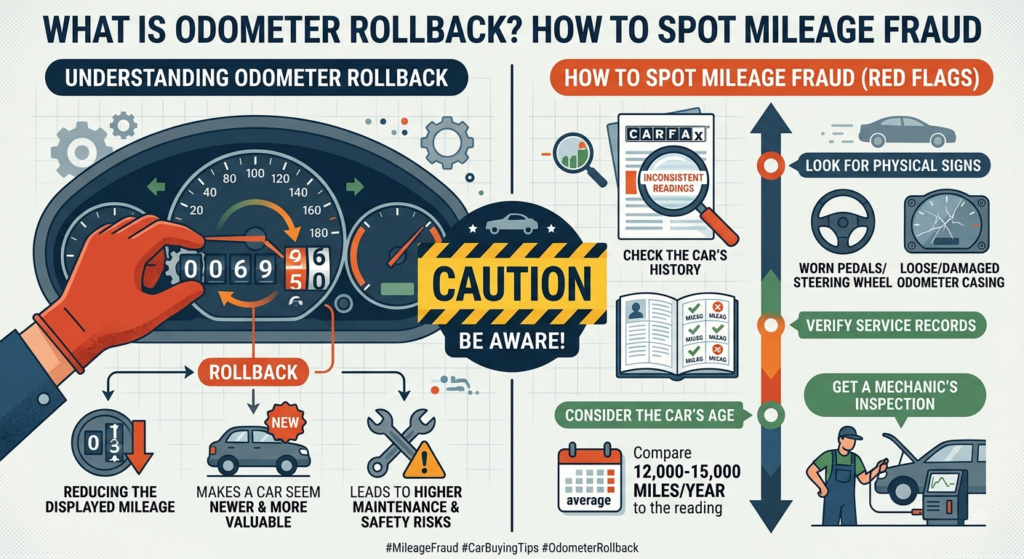
A used car’s mileage is one of the biggest factors in its price — which is exactly why some sellers cheat it. Odometer rollback, the practice of illegally winding back a car’s recorded mileage, costs American car buyers over a billion dollars a year. Here’s how the fraud works and how to make sure you’re not the next victim.
What is odometer rollback?
Odometer rollback (also called odometer fraud or mileage tampering) is altering a vehicle’s odometer to show fewer miles than it has actually traveled. A car with 150,000 miles rolled back to 90,000 looks newer, less worn, and worth thousands more — so the seller pockets the difference while the buyer overpays for a more worn-out car.
It’s a federal crime, but it still happens constantly. In the era of mechanical odometers, rolling back the numbers took physical effort. Today, with digital odometers, it can be done in minutes with cheap electronic tools — which has actually made the problem worse, not better.
Why odometer fraud matters to you
Beyond simply overpaying, a car with hidden high mileage means:
- Unexpected repairs. Components wear out on a schedule tied to real mileage. Buy a “90,000-mile” car that’s actually done 150,000, and you’ll face major maintenance far sooner than you budgeted for.
- Safety risks. Timing belts, brakes, and suspension parts have real-world service lives. Hidden mileage means these may be dangerously overdue.
- Lost value. When you eventually sell, the true mileage may surface — and you’ll take the loss the previous seller dodged.
How to spot odometer rollback
Some signs you can catch by inspecting the car:
- Wear that doesn’t match the miles. A low-mileage car shouldn’t have a shiny worn steering wheel, sagging seats, worn pedal rubber, or a polished gear shifter. Interior wear is one of the hardest things to fake.
- Worn tires on “low mileage.” Original tires typically last 40,000–60,000 miles. If a “50,000-mile” car is on its second or third set of tires, the math doesn’t add up.
- Inconsistent service stickers. Check the oil-change sticker in the door jamb or under the hood, and any service records. If they show higher mileage than the odometer, that’s a smoking gun.
- Odometer that looks tampered with. On mechanical odometers, misaligned or crooked numbers are a warning sign. On digital ones, look for dashboard screws that appear to have been removed.
The definitive check: the VIN’s mileage history
Physical clues help, but the airtight way to catch a rollback is the recorded history. Every time a car changes hands, gets inspected, or is serviced, its mileage is often recorded — at the DMV, at service shops, at auctions. A cheap Carfax report lets you check the odometer history across all those records.
If the report shows the car read 140,000 miles two years ago but the dashboard now says 95,000, you’ve caught the fraud instantly — something no amount of interior detailing can hide. A history report plots the mileage over time, so a rollback shows up as an impossible drop. Learn how to read these records in how to read a Carfax report.
What to do if you suspect a rollback
- Run the history report first. It’s the fastest way to confirm or clear your suspicion.
- Cross-check every mileage source. Service records, inspection stickers, and the title should all agree with the odometer.
- Walk away from mismatches. An unexplained mileage discrepancy is fraud until proven otherwise — don’t let a seller talk you past it.
- Inspect thoroughly. Pair the report with our used car inspection checklist.
What a mileage discrepancy on Carfax means
If a Carfax report flags a “potential odometer rollback” or a mileage inconsistency, a later odometer reading in the car’s records is lower than an earlier one. Sometimes there’s an innocent cause — a typo at an inspection station, or a documented instrument-cluster replacement — but treat any unexplained discrepancy as a red flag until the seller shows paperwork that explains it.
What to do if you already bought a car with a rolled-back odometer
- Gather proof. Keep the bill of sale, the odometer disclosure statement you signed, the original listing, and a vehicle history report showing the higher earlier reading.
- Contact the seller. A dealer may cancel the sale or compensate you rather than face a formal complaint.
- Report it. File a complaint with your state attorney general or DMV. Federal law lets buyers sue for odometer fraud, so a consumer-protection attorney can tell you what you may be owed.
- Disclose it if you sell. Never pass the car on without disclosing that the odometer doesn’t show the actual mileage — that would make you part of the fraud.
The bottom line
Odometer rollback is common, illegal, and expensive for the buyer who gets caught by it. Physical wear gives you clues, but the recorded mileage history is what catches it for certain. Run the VIN before you buy — if the mileage history and the dashboard disagree, you’ve just saved yourself thousands and a garage full of surprise repairs.