
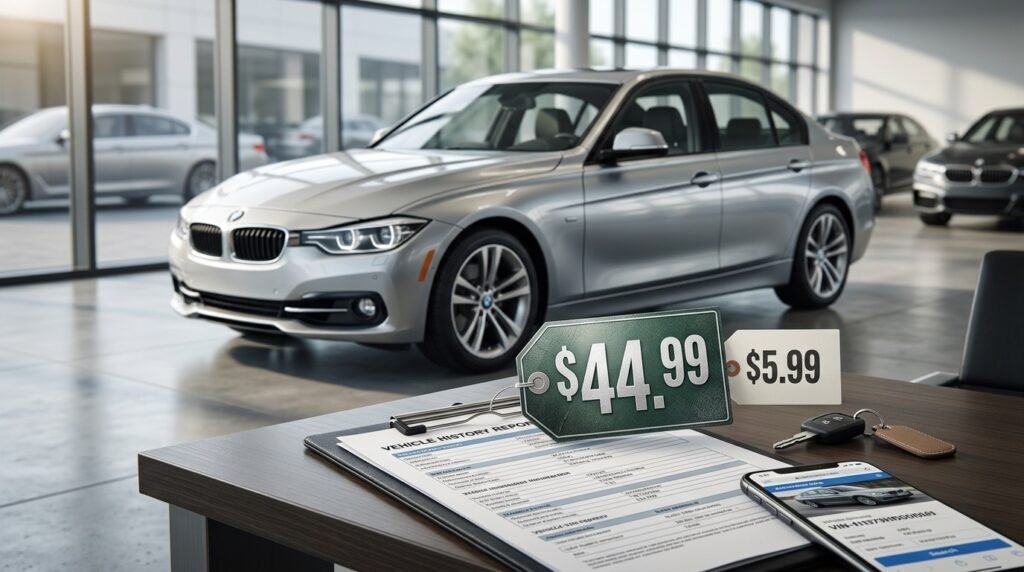
If you’re shopping for a used car, you’ve probably had sticker shock at the price of a Carfax report — around $45 for a single report, or more for a bundle. When you’re comparing several cars, that adds up fast. So why is Carfax so expensive, what are you actually paying for, and is there a way to pay less? Here’s an honest breakdown.
Why Carfax reports cost so much
Carfax’s retail pricing isn’t random. A few real factors drive the cost:
- Data licensing. Carfax pulls records from thousands of sources — DMVs, insurance companies, service shops, auctions, police reports. Aggregating and licensing all that data is genuinely expensive, and that cost is built into the price.
- Brand and market position. Carfax is the most recognized name in vehicle history. That brand recognition lets them charge a premium — buyers trust the name and are willing to pay for it.
- Marketing. Those TV ads and the “Show me the Carfax” campaign aren’t free. A large marketing budget is part of what keeps the brand dominant — and part of what you’re paying for.
- Little price pressure at retail. Because the brand is so dominant, there’s limited pressure to lower the sticker price for individual buyers.
So the retail price reflects real data costs plus a significant brand premium. You’re paying for genuinely valuable data — but also for the marketing and the name.
What you’re actually paying for
To be clear, a Carfax report is valuable. For your money you get a genuinely useful document: reported accidents and damage, title checks (salvage, flood, rebuilt), ownership history, odometer readings, and open recalls. For understanding a car’s past, it’s one of the best tools available. Our guide on how to read a Carfax report walks through everything it includes.
The question isn’t whether the report is worth having — it is. The question is whether you have to pay full retail price to get it. And the answer is no.
How to get the same report for less
Here’s what many buyers don’t realize: the retail sticker price isn’t the only way to get an official Carfax report. Carfax sells reports in bulk to authorized resellers at wholesale rates — the same way a warehouse club buys products in bulk and sells them below retail. Those resellers pass the savings on.
That means you can get a discounted Carfax report — the exact same official document, with the same accident history, title checks, and ownership records — for a fraction of the retail price. The report is identical; only the price is different. The high retail cost is largely brand premium, and buying through a reseller lets you skip paying for it.
If a much lower price makes you skeptical (reasonably so), read is a cheap Carfax report legit? — it explains how the discount works and how to confirm a report is the genuine article.
The smart way to buy reports when comparing cars
- Don’t pay retail on every car. At $45 each, running reports on five cars costs $225. That’s the trap.
- Use discounted reports so you can check every finalist. When a report costs a few dollars instead of $45, you can afford to check each serious contender rather than gambling on one.
- Check before you fall in love. Run the report early, so a hidden salvage title or accident history saves you before you’re emotionally committed.
Hoping a coupon will bring the price down? Carfax rarely publishes working ones — see our Carfax coupon codes guide for what actually saves money.
The bottom line
Carfax is expensive at retail because you’re paying for real data licensing plus a hefty brand premium and marketing budget. The data is worth having — but the full retail price isn’t the only option. Because authorized resellers buy in bulk, you can get the same official report for a fraction of the cost, which means you can actually afford to check every car you’re serious about instead of rationing reports to save money.