
Buying a used car means taking on someone else’s history — and whatever problems came with it. A careful inspection is your best protection against buying a money pit. This checklist walks you through everything to check before you hand over a cent, from the paint to the paperwork.
Print it, save it to your phone, or keep this page open while you look at the car. Work through each section and you’ll catch the vast majority of problems before they become your problems.
Before you go: check the history first
The smartest inspection starts before you even see the car. Get the VIN from the seller and run a vehicle history report — it tells you about reported accidents, title problems, previous owners, and service records that no visual inspection can reveal. If the report shows major accident damage, a salvage title, or an odometer discrepancy, you can walk away before wasting a trip. (Not sure where the VIN is? Here’s where to find your VIN.)
With that done, here’s what to check in person.
Exterior inspection
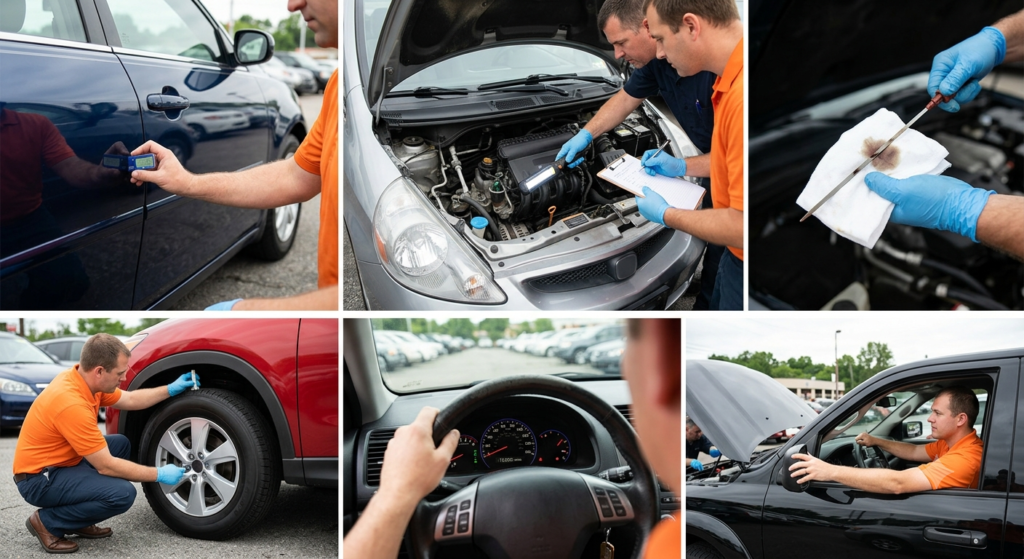
- Body panels and paint: Look down the side of the car in good light. Waves, ripples, or paint that doesn’t quite match between panels can indicate past bodywork or accident repair.
- Panel gaps: The spaces between doors, hood, and fenders should be even. Uneven gaps suggest the car was in a collision and reassembled.
- Rust: Check wheel wells, door bottoms, the undercarriage, and around the windshield. Surface rust is manageable; structural rust is a dealbreaker.
- Tires: Uneven tread wear points to alignment or suspension problems. Check that all four match and note the tread depth.
- Lights and glass: Test every light. Look for chips or cracks in the windshield.
Interior inspection
- Electronics: Test everything — windows, locks, AC and heat, radio, backup camera, every button. Electrical gremlins are expensive and hard to diagnose.
- Upholstery and smell: A musty or moldy smell can signal water damage or a flood history. Damp carpets or water lines are major warning signs.
- Dashboard warning lights: When you turn the key to “on,” lights should illuminate and then go off once running. A check-engine light that stays on — or a dash cluster where bulbs have been removed — needs investigation.
- Odometer: Does the mileage match the wear? A car with 40,000 miles shouldn’t have worn pedals, a shiny steering wheel, and sagging seats. Compare against the mileage on the history report.
Under the hood
- Fluids: Check the oil (dark is normal, milky or foamy is bad), coolant, and transmission fluid. Low or dirty fluids suggest poor maintenance.
- Leaks: Look for wet spots or residue on the engine and on the ground beneath the car.
- Belts and hoses: Cracked or frayed belts and soft, bulging hoses are cheap to replace but tell you how the car was cared for.
- Battery: Check for corrosion on the terminals and note the battery’s age if visible.
The test drive
Never buy a used car you haven’t driven. On the drive:
- Cold start: Start the car when the engine is cold if possible — some problems only show on startup.
- Listen: Knocking, ticking, whining, or grinding are all worth asking about. The car should sound smooth.
- Braking: Brakes should feel firm and stop the car straight, with no pulling, grinding, or a pulsing pedal.
- Steering and alignment: The car should track straight on a level road without you fighting the wheel. Vibration in the steering wheel points to tire or suspension issues.
- Transmission: Shifts should be smooth. Hesitation, hard shifts, or slipping are red flags for expensive repairs.
The paperwork
- Title: Confirm the seller’s name matches the title, and check that it’s a clean title — not salvage, rebuilt, or branded. Cross-check the VIN on the title against the VIN on the car.
- Service records: A well-kept maintenance history is a great sign. Compare it against the service records on the vehicle history report.
- Registration: Make sure registration is current and there are no outstanding issues.
The VIN on the dashboard (visible through the windshield) and the door-jamb sticker should match each other and the paperwork. Mismatches are a serious red flag. If you want to understand what the VIN itself encodes, we break it down in how to read a Carfax report.
When to bring a mechanic
For any car you’re seriously considering, a pre-purchase inspection by an independent mechanic (usually $100–$200) is money well spent. They’ll put it on a lift and catch things you can’t — frame damage, hidden leaks, worn suspension. If a seller refuses to let you get one, that itself tells you something.
The bottom line
A used car inspection is really two inspections: the paperwork trail (history report and title) and the physical car. Do both. The history report catches the hidden past; the hands-on checklist catches the visible present. Together they’re the difference between a great used-car deal and an expensive mistake.
Start with the history — check any VIN and run a full report for $5 →